Lacey
Mariners' Museum, Uncurated Search Results
Type: Bugeye
Year: 1902
Builder:
Location: Unlocated - Wit

These records are found in the online catalog of The Mariners’ Museum and Park in Newport News, Virginia. Uncurated search results are presented to give researchers and interested readers an idea of whether the museum’s archives contain information about this vessel and whether it may be worthwhile to visit the museum’s catalog search page for further investigation. Uncurated results may be inaccurate or incomplete.
Search mode: Exact Name. Search phrase(s): "Lacey". Results returned: 26. Results displayed in this table: 26.
Use these buttons to send uncurated search results to your own app or text document for further research. First, check the box for any row, or click "Select All" then uncheck any rows. Then click "Show Selections". You can then copy your selections from the text box and past them into your app.
| Fetch? | Row ID | Media | Date | Vessel | Place | Related Places | Inscription/Marks | Subject | Notes | Archive Number |
|---|---|---|---|---|---|---|---|---|---|---|
| 1 | 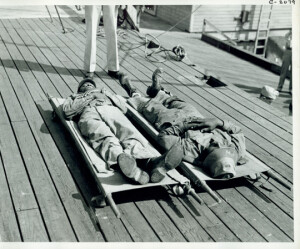 | 5/11/1943 | United States. Army. Camp Hill (Va.). Warehouse 24. | "Two litter cases placed on pier prior to attachment of lift for loading. Photo was taken at Warehouse 24, Camp Hill Area, HRPE, Newport News, Va. 5-11-43 Official photograph U.S.Army Signal Corps, HRPE, Newport News, Virginia"; stamped in black "Restricted" | Litters–Virginia–Newport News. | Private Lacey Jones and Private Leroy Rose laying on stretchers. | P0003/01-#C-2079 | |||
| 2 | 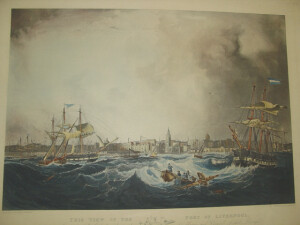 | NOTES: Duplicate copy deaccessioned on February 21, l980. | CL17066 | |||||||
| 3 | 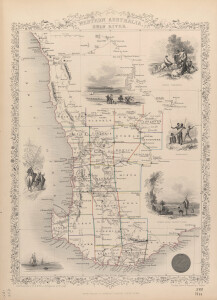 | 1851 | Western Australia–Maps. | "The Illustrations by A.H. Wray & Engraved by W. Lacey", "The Map, Drawn & Engraved by J. Rapkin.", "John Tallis & Company, London & New York" lower margin | Map of Western Australia with counties in outline color. Black and white illustrations of Sheep Shearing, Between Perth and Fremantle, Aborigines, Shepherds, a harbor with ships, and a seal with a swan throughout the map. Elaborate around map, outside of neatline. | MSM 1/-#1228 | ||||
| 4 | No image URL. | Ocean travel.; Sailing ships.; Sailors–Diaries | Diaries from the days of sail __ __edited by R.C. Bell ; introd. by Alan Villiers ; technical editor, C.P. Seyd | LB11856 | ||||||
| 5 |  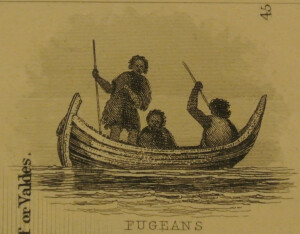 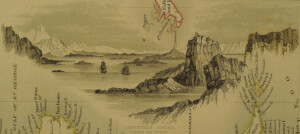 | 1851 | Falkland Islands–Maps. | "The Illustrations by H. Winkles & Engraved by W. Lacey", "John Tallis & Company, London & New York", "The Map Drawn & Engraved by J. Rapkin" lower margin | two maps on one page, illustratinos of (1) Jason Islands, (2) Penguins, (3) Sea Eagles, (4) Fugeans, (5) Christmas Sound Tierra del Fuego; ornamental border around map | MSM 1/-#1361 | ||||
| 6 | 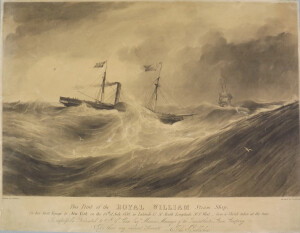 | NOTES: The last line of the caption is cut off and should read: Published by Samuel Walters and Henry Lacey, Liverpool, J. McCormick, Strand, London -- and Appleton & Co., New York. The artist William Henry Bartlett was on board the ship during this voyage, see attached blog post for details. ADDITIONAL INFORMATION: See Park & Bowen, "Mail and Passenger Steamships," page 258. NOTES: This vessel should not be confused with the earlier ROYAL WILLIAM, built in 1831, which it is claimed by some made the first transatlantic crossing under steam alone. See LP 2089. VESSEL NAME: ROYAL WILLIAM VESSEL TYPE: BRITISH, STEAMSHIP VESSEL HISTORY: 1ST VOYAGE TO NEW YORK, 1838 SHIPBUILDERS: WILSON & CO. (T. WILSON SONS & CO. WAS FORMED IN 1840.) SHIP OWNERS: CITY OF DUBLIN STEAM PACKET CO. | CL20042 | |||||||
| 7 | No image URL. | Queen Mary (Turbo steamship : 1936).; Queen Mary (Turbo steamship : 1946).; Queen Elizabeth (Turbo steamship : 1940).; Queen Elizabeth (Turbo steamship : 1945). | The Queens of the North Atlantic __ __by Robert Lacey | LB22585 | ||||||
| 8 | 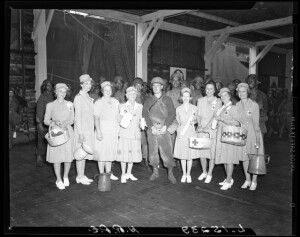 | 8/21/1945 | United States. Army–Officers.; United States. Army. Quartermaster Service Company, 3116th.; General Le Roy Eltinge (Steamship : 1945).; Queen Elizabeth (Steamship : 1939). | 1st Lt. Harland W. Lacey, O-421876, Roan Mountain, Tennessee, Commanding Officer of the 3116th Service Company (Shipment R5911-S) is photographed with members of Unit No. 3, American Red Cross Canteen Service on Pier 8, HRPE, Newport News, Va., after he had debarked with his men (background), from the USS GENERAL LEROY ELTINGE. Lt. Lacey was commissioned in the 6th Cavalry Reserve, C.M.T.C. and went on active duty 29 January 1942. He sailed overseas from NYPE on the HMS Queen Elizabeth, 29 August 1944. Left to right: Mrs. L.Z. Smith, Newport News, Va.; Mrs. J.M. Winfield, Newport News, Va.; Mrs. G.T. Burke, Newport News, Va.; Mrs. W.W. Royall, Newport News, Va.; Lt. Lacey; Mrs. H.L. Graham, Newport News, Va.; Mrs. J.B. Adams; Mrs. Lydia Allen; and Mrs. Rufus Hogg. Photo taken for Historical purposes. | African American soldiers.; World War, 1939-1945–War work–Red Cross. | Group photo of eight women of the Red Cross canteen service with pitchers, paper cups, and baskets of donuts. They are joined on an HRPE pier by a group of African American men and their white commanding officer. | P0003/01-#L-15239 | |||
| 9 | 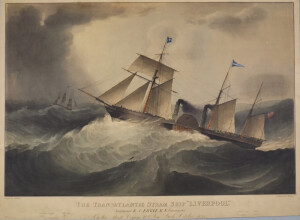 | VESSEL INFORMATION - VESSEL NAME: LIVERPOOL VESSEL DATES: 1837-1846 ALL SHIP'S NAMES: (1) LIVERPOOL (1838-1840), (2) GREAT LIVERPOOL (1840-1846). SHIP'S COMMANDER: R.J. FAYRER SHIP OWNERS: Transatlantic Steamship Co. VESSEL DIMENSIONS: 213'7"' length x 25'5" beam x 19' depth of hold, 1,382 tonnage (NOTE: Marks length data is for the GREAT LIVERPOOL. See vessel database. Arnie Janot 4-16-15.) | CL8549 | |||||||
| 10 | No image URL. | Sir Walter Ralegh | LB8000 | |||||||
| 11 | 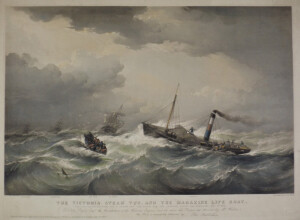 | ADDITIONAL INFORMATION: Parker & Brown, "Mail & Passenger Steamships", p. 294 | CL18374 | |||||||
| 12 | 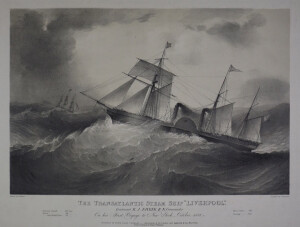 | ADDITIONAL INFORMATION: See Parker & Bowen, "Mail and Passenger Steamships", page 179, 180. VESSEL INFORMATION - VESSEL NAME: LIVERPOOL VESSEL TYPE: BRITISH WOODEN PADDLE SIDE-WHEEL STEAMER VESSEL BUILT: 1837 SHIP OWNERS: CITY OF DUBLIN STEAM PACKET COMPANY VESSEL HISTORY: She made her first trip across the Atlantic in 1838 and required 16-1/2 days. After a few unsuccessful voyages in 1840, she was sold to the Peninsula & Oriental Steamship Company. She was later lengthened and renamed the GREAT LIVERPOOL. She was wrecked in February, l846, on a reef off Cape Finisterre, later breaking up. Alternate vessel names: (1) LIVERPOOL (1838-1840); (2) GREAT LIVERPOOL (1840-1846). | CL27138 | |||||||
| 13 | No image URL. | Keep from all thoughtful men : how U.S. economistswon World War II. | LB98008 | |||||||
| 14 | 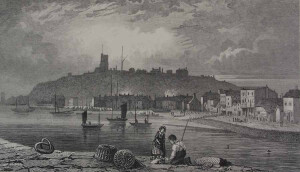 | SHORT DESCRIPTION: The image shows the town of Folkestone, England looking across the harbor. In the foreground is a stone pier or breakwater, with a man kneeling and a woman standing near baskets. The town is on the right and stretches into the background, with a high bluff overlooking the town. On the bluff is a church, St. Mary and St. Eanswythe, and several smaller buildings. In the harbor there are several small sailing vessels. NOTES: The town is spelled Folkestone, and is misspelled on the print. NOTES: Image is from after page 34 of “Beauties of English Scenery,” written by John Tillotson and published by J.T. Allman in 1860. NOTES: St. Mary and St. Eanswythe was the site of the first abbess in England, and has been a site of worship since about 650. The current building is the fourth, and dates to about 1135. The piers in the Folkestone harbor were built in 1810 and another in 1820, to create a safe place for ships to dock. The architects and builders included William Jessop and Thomas Telford. | CL15632 | |||||||
| 15 | No image URL. | Diesel motor. | Diesel engines, operation and maintenance : __a practical text on the construction, operation, and repair of heavy-duty engines __by L.H. Morrison | LB23245 | ||||||
| 16 | No image URL. | Diesel motor.; Internal combustion engines. | "Eighth edition." Earlier editions published under titles: Oil engine power plant handbook and Diesel power plant handbook. Includes index. | LB2446 | ||||||
| 17 | No image URL. | Steam-engines–History | Added t.-p., illus. "Chronological list of patents for improvements on the steam engine, and for saving fuel by the construction of the fire-place and boiler": p. [209]-219. | LB30718 | ||||||
| 18 | No image URL. | Tankers. | "Relating to the arrangement, management and maintenance of the liquid-in-bulk carrier. Her cargoes, cargo-handling and ballasting operations explained." | LB21508 | ||||||
| 19 | 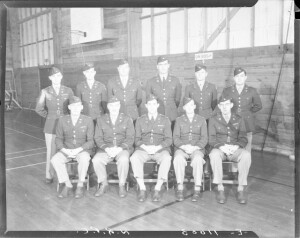 | 11/28/1944 | Port of Embarkation, Hampton Roads, Va. (U.S.). Gymnasium.; United States. Army. Officers. | E-11003 - Group photograph of Control Division Officers, HRPE, Newport News, Va. Photo taken for Historical purposes. 11-28-44 Official Photograph, U. S. Army Signal Corps, HRPE, Newport News, Va. | Portraits, Group–Virginia–Newport News. | Shows officers in uniform posing in several rows for a group portrait. Marked as the HRPE Gym in the index. | P0003/01-#E-11003 | |||
| 20 | 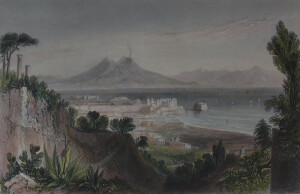 | SHORT DESCRIPTION: The print shows the Gulf of Naples in Italy. In the foreground on the left is a steep hill, with plants and two columns near the top. Farther out is the city of Naples, with the Castel dell’Ovo connected to the mainland by a small causeway. To the left of the castle are two domes, one of which is probably the Basilica di San Francesco di Paola. In the far distance is Mount Vesuvius with smoke rising from the volcano. NOTES: Image is from after page 152 of “The Shores and Islands of the Mediterranean,” written by Sir Grenville Temple and published by Fisher Son & Co. in 1840. The text describing the city in general is on pages 149-150 of the book. NOTES: The Falconnet name is most likely from Falconnet & Co., a Swiss banker who came to Naples after businessmen like Carl Rothschild demonstrated that the city was great for international banking. The company seems to have failed in 1836. The construction of the Basilica di San Francesco di Paola was finished in 1816. The fortifications where Castel dell’Ovo now stand date back to the 6th century BCE, but the current structure dates to the 15th century. It was initially on a small island, which is now connected to the mainland by a causeway. | CL16133 | |||||||
| 21 | No image URL. | Engineering–Periodicals.; Manufactures–Periodicals. | Subtitle varies. Title-pages of v. 1-8 read: Mechanics' magazine. | LB29948 | ||||||
| 22 | No image URL. | Great Britain–History–Elizabeth, 1558-1603; Europe–History–1492-1648. | Also published in 1967 with few illustrations under title: The Elizabethan World. | LB7628 | ||||||
| 23 | No image URL. | Great Britain–History, Naval–Tudors, 1485-1603.; Spain–History, Naval–16th century. | Armada, 1588 | The Spanish Armada __ __by the editors of Horizon magazine ; author: Jay Williams ; consultant: Lacey Baldwin Smith | LB7918 | |||||
| 24 | 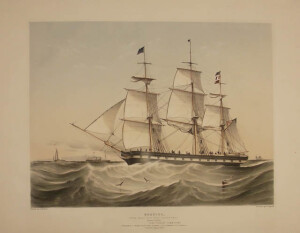 | NOTES: This print shows a black ball hanging from the main mast. According to the Encyclopedia of Nautical Knowledge the black ball was a spherical collapsible shape, usually made of canvas, and black in color. A black ball of two feet in diameter is required to be displayed forward in a vessel, where it can best be seen, when such vessel, being of more than 300 gross tons and propelled by machinery, is moored or anchored in a fairway or channel. It seems a little odd that this ship is flying this particular signal because the ship is obviously underway--maybe they are leaving an anchorage or getting ready to anchor? Men can be seen climbing the rigging so obviously some sort of maneuver is taking place. VESSEL INFORMATION - VESSEL NAME: ROSCIUS VESSEL TYPE: FIRST CLASS NEW YORK PACKET SHIP SHIPBUILDER: BROWN & BELL SHIPBUILDER LOCATION: NEW YORK VESSEL WEIGHT: 1100 TONS CAPTAIN: JOHN COLLINS SHIP OWNERS: E. K. COLLINS SHIP LINE: DRAMATIC LINE | CL19217 | |||||||
| 25 | 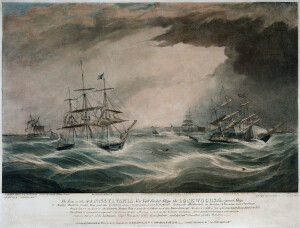 | SHORT DESCRIPTION: Colored lithograph titled "The loss of the Pennsylvania New York Packet Ship: the Lockwoods Emigrant Ship: the Saint Andrews Packet Ship and the Victoria from Charleston: near Liverpool during the Hurricane on Monday & Tuesday January 7th & 8th, 1839." The image was painted by Samuel Walters and lithographed by Thomas Fairland in England. The image shows a view from seaward looking towards the North Wirral coastline with the Leasowe Lighthouse at the center. Looking from left to right Walters has depicted the Victoria steam tug towing the Magazines lifeboat with another unidentified vessel near its bow, the packet ship Saint Andrew aground on the Burbo Bank, the Mountaineer steam packet, the packet ship Pennsylvania aground on the Hoyle Bank, Pilot Boat No. 5 in the Rock Channel, the ship Victoria drifting towards the shore near the Leasowe lighthouse, a gig from the Lockwoods emigrant ship, the Lockwoods emigrant ship aground on the North Bank, and the ship Ward anchored at the entrance to the channel to Liverpool. All of the larger vessels are grounded on the sandbanks at the entrance to the Mersey River and are struggling in the stormy seas. The two most prominent vessels are the American three-masted ship Pennsylvania at the center left and the British Lockwoods Emigrant ship at the center right. Both are signalling distress by flying their national flags upside down at the stern. On the Pennsylvania, sailors are visible in the rigging on the main and mizzen masts. All of its sails appear to be blown out although the fore course may be brailled up. People can be see standing on the deck of the Lockwoods ship. Most of its sails have been blown out with the except of the mizzen topsail which is backed against the mast and the main course which appears brailled up. A small rowing boat full of people sits near its stern. Waves are crashing over the bows of both vessels. To the left of Pennsylvania, the ship Saint Andrew with topmasts removed. In the background behind the Leasowe lighthouse the Bidston Hill signal station can be faintly seen through the storm. NOTES: According to Chris Michael in “The Liverpool Hurricane of 1839” one of the most severe and destructive storms in England was the hurricane of 1839. Many trees were felled, houses were damaged, people were killed, and many ships were damaged or destroyed, especially in Liverpool. Approximately 300 died in Ireland and tens of thousands were left homeless. The winds that reportedly reached over 115mph destroyed 25% of the houses in Dublin and 42 ships. Around Liverpool the winds were reportedly over 100mph and salt spray reached as far as 70 miles inland. The majority of the fatalities occurred near Liverpool where 9 people were killed and 106 were drowned. On the afternoon of January 6th the wind turned southerly and many ships sailed from Liverpool around 3:00PM. Around midnight, with no warning, the wind increased to hurricane strength from the west or northwest. Many ships immediately lost their sails and rigging, but they were able to affect temporary repairs and head back towards Liverpool on Monday. As the vessels approached Liverpool they were unable to find the Northwest Lightship which had been ripped from its moorings and was sheltered in the Mersey starting around 1:30PM on Monday. The lightship didn’t make it back on station until Wednesday. In the lightship’s absence a number of vessels went aground and the rescue operations took a long time, partly because the lifeboat service was not prepared and in some cases not willing to participate in rescue operations. The waves were probably in the range of 8 meters high and with the ebbing tide would have been very steep and breaking. When the Mersey pilots learned of several large vessels wrecked on the sandbanks outside the Mersey River they persuaded the Liverpool Steam Tug Company to send their largest tug, PS Victoria, out to attempt rescue operations. Victoria left port on Tuesday at 1:00PM with the masters of Pilot Boats No.s 1 and 4 and 13 volunteer branch pilots. The Victoria towed the Dock Trustee’s Magazines lifeboat behind her. Loss of the packet ship Pennsylvania (Captain John P. Smith, 808 tons, 148' x 34'9" built NY 1836, Blue Swallowtail Line): The packet-ship Pennsylvania (captained by Smith and sailing for New York), spent a week windbound anchored at the Rock starting on December 25th. It has 35 crew and five passengers on board. It was finally towed to sea by a steam tug at noon on Sunday, January 6, 1839. The run to Point Lynas was fine, but around 9:00PM there was dead calm for about 10 minutes followed by a strengthening southwesterly breeze. As the wind strengthened the sails were taken in or reefed. By 2:00AM on Monday the ship had lost its fore and mizzen topsail yards and the main topsail had blown out of its bolt ropes. The furled courses were shredded and the foreyard was badly sprung. The vessel drifted throughout Monday. On Tuesday the ship was off Orme’s Head so some sails were set and the ship headed back to Liverpool. The crew were unable to find the Northwest Lightship which had been blown off station and was sheltering nearby. The Pennsylvania followed the Lockwoods which was also searching for the lightship. When two or three miles off Hoylake beach the Pennsylvania put out an anchor and 30 fathoms of cable but the anchor chain snapped. After drifting for 12 minutes to leeward, the vessel struck hard on the Hoyle Bank a half mile to the east of the Lockwoods which had struck the North Bank. After thumping 8 or 9 times the Pennsylvania was filled with water. After thumping several more times, the 1st and 2nd mates, 5 crew and 5 passengers launched the jolly boat over the stern and made for the Wirral shore which was about three miles away. Within a mile of the beach the boat was swamped. One passenger who was wearing a lifevest was able to reach the shore; the other people in the boat were drowned. Their bodies washed ashore later and were taken to Leasowe Castle for identification. While this was occurring the remaining crew of Pennsylvania attempted to launch the ship’s longboat, but it was stove in by a wave at which point Captain Smith was injured. Captain Smith attempted to jump into the main rigging but fell down between two water casks which crushed him when another huge wave washed over the deck. Smith was never seen again. The third mate, a man named Richards, immediately ordered the crew into the rigging where they wrapped themselves in sails for protection from the waves and bitter cold. They stayed there until they were rescued by the P.S. Victoria at 10:30AM on Wednesday morning. Three crew members died in the rigging. Of the 40 people who started the voyage only 21 were saved. The cargo, reportedly valued at £400,000 was lost. Loss of the emigrant ship Lockwoods, January 8th, 1839 (Ship, 137’ x 30’, 872 tons, built in New Brunswick in 1836, Captain G. Sproule): Lockwoods sailed from Liverpool with 86 passengers for New York between 1:00 and 2:00PM on January 6, 1839. Many of the passengers were families emigrating to America. When dark, it was obvious a storm was approaching so the crew began reefing the sails. Around 10:00PM the storm began in earnest blowing out the ship’s topsails. According to mate Thomas Fleck, the last land the crew say was between Point Lynas and the Great Ormes Head. Overnight the ship drifted down the Lancaster coast and about 3:00PM the crew discovered they were off Black Combe. The crew hoisted a fore topmast staysail and wore the ship around to return to Liverpool. Around 10:00AM on Tuesday the crew spotted Ormes Head but the gale was still blowing. The crew continued towards Liverpool sounding with the lead the entire time and by noon they expected to see the lightship or a pilot boat. Lockwoods arrived off the entrance to the Rock Channel on Tuesday morning. The crew sailed towards a mast with a flag flying on it assuming it was the Northwest Lightship but it wasn’t, the lightship had been driven from its mooring. The mast was a sloop that had been wrecked on the sandbank and the “flag” was the remnants of one of its sails. Around midday the crew discovered their error and immediately anchored. The anchor cables parted in the steep waves and about 1:00PM Lockwoods was driven onto the sandbank (possibly the North Bank, 200 yards to the east of Spencer Gut Buoy, about two miles from Mockbeggar Light) about three miles north of Leasowe. The seas broke over the vessel and filled the ship. Seeing Pilot Boat No. 5 nearby, Captain Sproule decided to go for assistance. The captain, carpenter, steward and two cabin passengers sailed to the pilot boat in a small gig which then rendered assistance along with the paddle tug P.S. Victoria. Several more crew and two passengers were rescued by Victoria from the ship’s pinnace. At great risk, the P.S. Victoria stationed itself close to the starboard quarter of Lockwoods so that people on board the ship could jump to safety. As the tide fell and darkness came it became too dangerous to attempt any more rescues so the Victoria returned to Liverpool with 56 people from Lockwoods and the St. Andrew. Several crew and passengers remained on board Lockwoods, many in the rigging of the mizzen mast as waves were breaking over the deck in the bitter cold. About 3:00AM the ship began to break up. Many of the passengers on board were drowned or died from exposure. When the Victoria returned at daybreak the scene was terrible with bodies hanging lifeless in the rigging or over the side. Victoria arrived with two gigs in tow, but it was too rough to use them. A Hoylake fishing boat was towed by Victoria to the Lockwoods wreck and that vessel was able to make two trips and rescue 22 people. One man refused to leave his unconscious wife in the wreck but they were rescued by a Hoylake lifeboat a short time later. While 24 of the 25 crew were rescued, only 34 of the 86 passengers were saved. Loss of the Saint Andrew (651 tons, 137’ x 32’ x 16’, built in New York in 1834 by C. Bergh & Co., Liverpool Red Star Line): The Saint Andrew, a packet ship of the Liverpool Red Star Line, left Liverpool at 2:00PM on Sunday, January 6, 1839. Her brand new, unused sails were torn to shreds after the storm hit. After one of the crew was severely injured after being dashed from a yard by a wave the rest of the crew refused to climb into the rigging. Some time between Monday night and Tuesday morning the crew cut away the ship’s topmasts and rigged mizzen and foresails and was making an effort to return to Liverpool. The crew anchored off the Burbo Bank but by about 10:30AM the anchors had given way and the was driven onto the bank. That afternoon the steam tug PS Victoria assisted by the Magazine lifeboat took off 23 persons. The steamship Mountaineer, which had been standing nearby but was unable to render aid, took off 16 more crew in her small boat after the Saint Andrew was washed over the bank into calmer water. While this rescue was underway the Magazines lifeboat passed by but offered no aid. Three crew members who remained on board Saint Andrew were able to leave the vessel when it drove ashore on the mainland beach. The cargo, reportedly valued at £500,000, was lost. Victoria: The Victoria, inward bound from Charleston, went ashore near Leasowe Lighthouse. No lives were lost but the vessel was totally wrecked. About 900 bales of cotton were salvaged from the wreck. Ward: The British ship Ward (745 tons) was built in 1836 in Nova Scotia. It managed to anchor at the entrance channel to Liverpool. The ship was inbound from St. John’s, New Brunswick. Rescue vessels: Between the steam tug PS Victoria, steamer Mountaineer, Pilot Boat No. 5, the Hoylake and Magazines lifeboats and a Hoylake fishing boat, 120 people were saved from the St. Andrew, Pennsylvania and Lockwoods. The Liverpool Steam-Tug Company met early on Monday (January 7th) and determined to send out the steam tug PS Victoria, Captain Eccles, to assist any vessels that were in distress. The ship left port at 1:00PM on the 8th with 16 volunteer pilots on board. The ship stopped at the Magazines and took the lifeboat owned by the Dock Trust in tow to assist in any rescues before proceeding to the Rock Channel. The Victoria reached the stranded St. Andrew about 3:30. One of Victoria’s boats with two volunteer pilots and the Magazines lifeboat made two trips and managed to bring off 23 of the St. Andrew’s crew. The Victoria then headed towards the Lockwoods, but the crew of the lifeboat refused to proceed with further rescues. Pilots aboard the Victoria offered to man the lifeboat but this was refused so the tow rope was slipped and the lifeboat sailed back to its station. The crew of Victoria managed to rescue 7 people from a pinnace from Lockwoods, which immediately sunk. The steam tug proceeded to Lockwoods and ran under her poop which was only partially visible above the water. A great number of passengers and crew were standing on the poop or in the rigging. Victoria rescued 26 people off the stranded Lockwoods before the tide receded so far the crew felt it was too dangerous to remain. About 6:00PM the tug sailed back to Liverpool and landed the 56 people rescued off the two ships. At 4:00AM on the morning of the 9th, after taking in fresh coal and 12 boatmen, Victoria proceeded back to the Lockwoods to rescue any survivors before heading to the stranded Pennsylvania nearby. At 7:00AM Victoria was abreast of those vessels and found the sea “breaking over them furiously” making it impossible to use the tug’s gigs to rescue them. At 8:00AM the crew spotted a fishing boat coming from Hoylake which joined the Victoria in making rescues from the Lockwoods. The fishing boat managed to pull 22 more people off the poop of Lockwoods. At the same time Victoria dispatched one of its gigs to the Pennsylvania which brought some survivors. The Magazines lifeboat also returned to the scene and managed to rescue a number of others. At this point a lifeboat from Hoylake arrived and was sent to the Lockwoods to rescue a man and his unconscious wife who had remained on board. Victoria then proceeded back to Liverpool with the survivors. Overall, Victoria saved 101 people. The captain was very critical of the crew of the Magazines lifeboat and felt that if that vessel had stayed on the 8th that the remainder of the passengers from the Lockwood and Pennsylvania could have been saved. The steamship Mountaineer, Captain Edwards, also provided much assistance. The steamship Mountaineer traded between Swansea and Liverpool and stood beside the stranded Saint Andrew for over an hour but was unable to help. The Mountaineer then proceeded to the ship Ward which was anchored off the northeast buoy. Ward didn’t need assistance, but asked that a message be passed to the ship’s consignees to send out another anchor and cable. The Mountaineer then tried to assist a sloop stranded on the West Hoyle bank but there appeared to be no one on board. At that point Mountaineer headed back towards the bank where Pennsylvania and Lockwoods had driven ashore. The steamer stationed itself on the leeward side of the bank hoping to assist any boats the two vessels might send out. When the Saint Andrew was driven over the Burbo Bank and into calmer water the Mountaineer was able to provide some assistance by remove 16 men off Saint Andrew using her small boat. During the rescue the Magazine lifeboat passed inward bound without offering any assistance. The Mountaineer then returned to Liverpool with the survivors, arriving there about 7:30PM. NOTES: According to bidstonhill.org.uk in 1763 a signal station was built on Bidston Hill and functioned as a complicated early warning system using flags and flagpoles. Bidston Hill can be seen for many miles in all directions and the windmill there served as a navigational daymark long before the erection of the signal station. In 1778 there were 14 flagpoles and by 1820 there were 195 poles. Each flagpole was 30 ft (9.14 m) tall and made of Baltic Pine. As merchant ships rounded the Point of Ayr or sailed past Formby Point the ship would be spotted and identified. Flag runners were employed to watch for ships and had 11 minutes to raise the correct company’s flag on the right pole, followed by the correct cargo flag. This enabled supervisors in the docks to ready their workforce to unload the ship (and it meant the workers would be paid only for the time they spent working). The flag signaling station operated until about 1840. A lighthouse was built at the station in 1771 by Liverpool's dockmaster William Hutchinson as a navigational aid. The lighthouse was designed to work in conjunction with the Leasowe Lighthouse to form a pair of leading lights that helped ships avoid sandbanks in the channel to Liverpool. In his 1795 history of Liverpool, James Wallace wrote: “There are at this time fifty-eight [signals], of which forty-nine belong to particular merchants, the remainder are to distinguish and shew if the vessels coming in are Greenlanders, men of war, or if the vessel is ship, brig, or snow; there are also immediate signals to the town of all vessels seen in distress in either of the channels, that thereby speedy assistance may be given.” VESSEL INFORMATION - VESSEL NAME: PENNSYLVANIA VESSEL TYPE: MERCHANT SHIP, POWER SAIL VESSEL BUILT: 1835 SHIP OWNERS: GRINNELL, MINTURN & CO.'S SWALLOWTAIL LINE WRECKED: 1839 VESSEL HISTORY: The Swallowtail Line packet ship PENNSYLVANIA had a successful and uneventful career until January 1839 as she was setting off from Liverpool she was caught in a storm. A tug, sent outside the next day to see if any vessels were in distress, discovered the PENNSYLVANIA in the surf, along with three other vessels. Some time elapsed before the tug got a line to the ship, during which five people died of exposure or were lost overboard. The ship and the cargo were a total loss. | CL17088 | |||||||
| 26 | 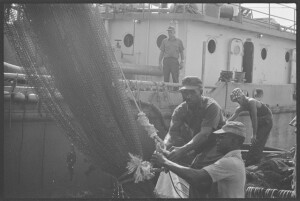 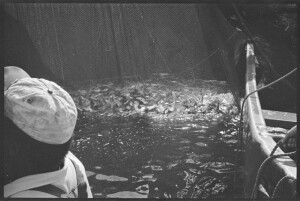 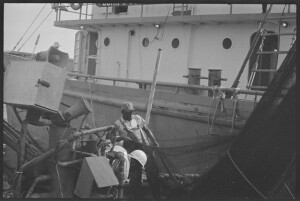 | Circa 1960-1970 | Standard Products Company, Inc. Photographs.; Seacoast Products, Inc. Photographs.; McNeal Co. Inc. Photographs. | Chesapeake Bay Region (Md. and Va.)–Photographs.; Port Monmouth (N.J.)–Photographs.; Louisiana–Photographs.; Rappahannock River (Va.)–Photographs. | Menhaden industry–Chesapeake Bay Region (Md. and Va.)–Photographs.; Menhaden industry–Louisiana–Photographs.; Menhaden industry–New Jersey–Photographs.; Fishing boats–Chesapeake Bay Region (Md. and Va.)–Photographs.; Work boats–Chesapeake Bay Region (Md. and Va.)–Photographs.; Transports–Chesapeake Bay Region (Md. and Va.)–Photographs.; Fishers–Chesapeake Bay Region (Md. and Va.)–Photographs.; Fish trade–Chesapeake Bay Region (Md. and Va.)–Photographs.; Docks–Chesapeake Bay Region (Md. and Va.)–Photographs.; Marine railways–Chesapeake Bay Region (Md. and Va.)–Photographs.; Boatbuilding–Chesapeake Bay Region (Md. and Va.)–Photographs.; Human beings–Chesapeake Bay Region (Md. and Va.)–Photographs. | Contains photographic negatives of the boat "Dempster", menhaden, the boat "John D. Diehl", Captain Leland Robinson and other fishing boat captains, fishing boats, fishermen, watermen, the ship "Atlantic Queen", Bellows' and Squire's fish factory, P.S. Green, Joseph S. Bellows, Captain Lacey Rose, Rappahannock river, purse nets and purse net repair, purse boats, Standard Products company, the boat "Lilly Mae", menhaden plant polution control, menhaden fishing, Standard Products plant, menhaden fishing fleets, Seacoast Menhaden Plant in Cameron, Louisiana, fish factory in Empire, Louisiana, Seacoast Products in Port Monmouth, New Jersey, Taft fish factory, McNeal Menhaden Plant in Fairport, Virginia, Dougle's fish factory, menhaden products and production, 2H Labs at Reedville, Virginia, trial run of the boat "Allen W. Haynie", the boat "North State", the boat "Hugh Haynie", Humphrey's marine railway, the boat "Mary S. Lewis", the boat "Ruth Conway", the boat "C. W. Curlett", the boat "Carol Ann", the ship "USS Grafton", the boat "Jim-O" at drydock, menhaden kelley boat "Marie", Cockrell's Creek, boat repair, Carter's Creek, and Captain Wallace E. Lewis. | MS0199/02-18 |
Created 2026 by Don Barker, CBMM volunteer, for the Chesapeake Shipbuilding Project. shipbuilding@sailingworkboats.es